
How a Lens That Covered the Whole Eye Shrank to the Size of an Iris
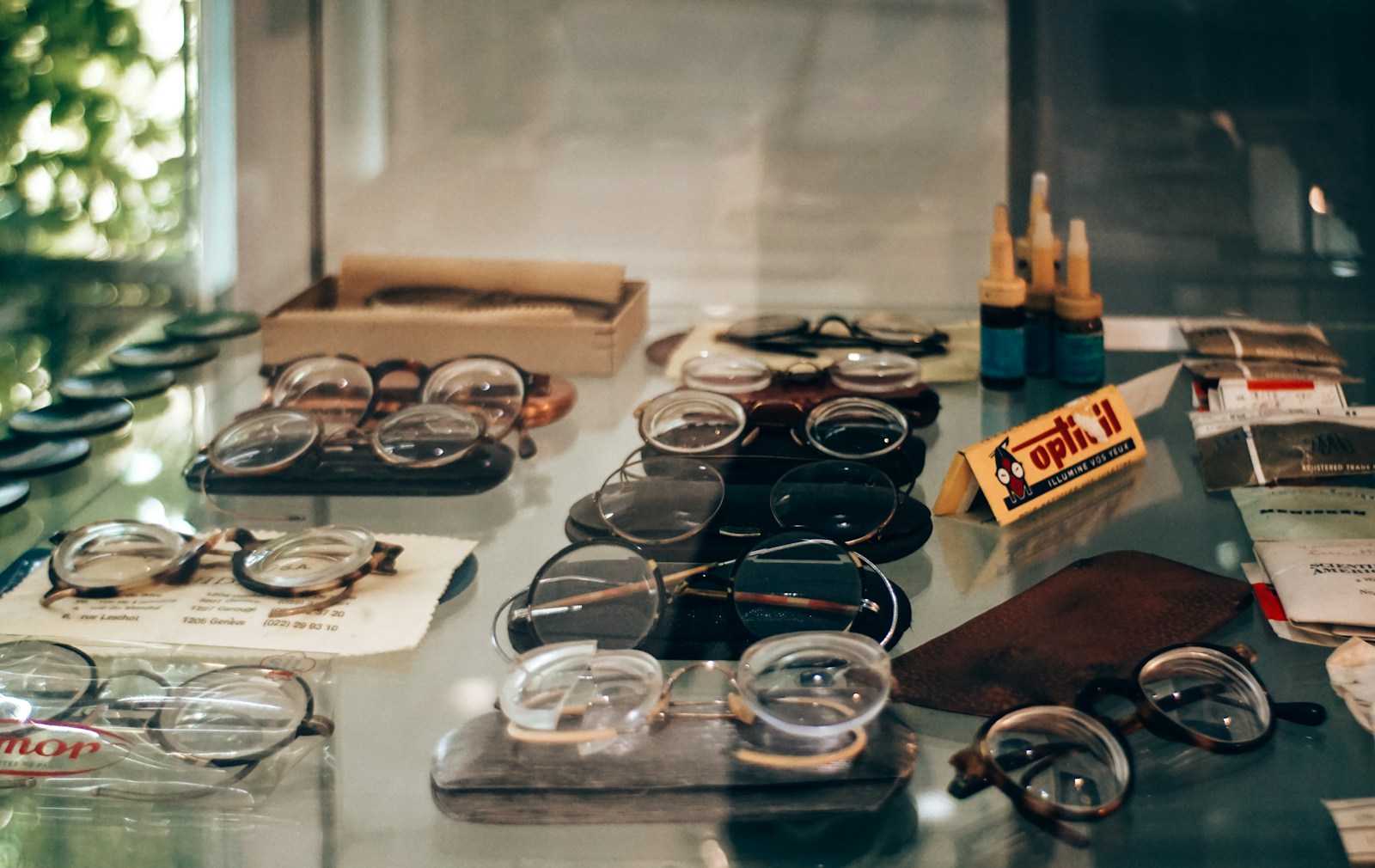
A contact lens in the 1940s was not something that would fit in today's lens case.
Clear material covered not only the cornea but a wide area of the white of the eye. Fluid was filled underneath, and the edge rested on the sclera. It could correct vision, but it was large and heavy. Circulation of tears and air was limited, and long wear was difficult.
Kevin Tuohy, a lens technician in Los Angeles, changed the question.
Is the large rim resting on the white of the eye really necessary? What happens if only the central part that corrects vision remains?
The change plastic made possible
Early lenses were made of glass: fragile and heavy. In the 1930s and 1940s a clear plastic called PMMA came into use. It was lighter than glass and easier to work, but the design still followed the old form that covered the whole eye.
Tuohy tested a small plastic lens around 1947 and filed a patent on 28 February 1948. The patent was granted in June 1950.
His lens had no broad rim resting on the sclera. A lens roughly 11.5 millimetres in diameter sat on the cornea. It was larger and thicker than a rigid lens of today, but next to the scleral lenses of the time it was small and light.
Why lenses with the same numbers can fit differently is set out in Why Do Contacts With the Same Base Curve and Diameter Fit Differently?.
Once it was smaller, the tears could move
The fluid under a scleral lens was easily trapped, and the cornea could cloud, limiting wearing time.
The small corneal lens moved a little with every blink. That movement could be a source of discomfort, but it also became the path by which tears were exchanged beneath the lens.
The early products were not perfect. They were thick and flat, and there were cases of corneal abrasion. Makers and optometrists went on to refine the curves, the edge and the thickness.
Rather than one invention completing the modern lens, what mattered was that a long-standing assumption — that a lens must cover the whole eye — had been broken.
Accident or invention?
There is a well-known story that while grinding the rim off a scleral lens, Tuohy tried the central piece that was left. Researchers point out that this account may be too simple.
Before Tuohy, others had conceived of and applied to patent small plastic corneal lenses. Dr Dennis England filed a patent in a similar direction in 1945, and it was not accepted.
The history of technology usually moves through overlapping attempts, manufacturing skill, patents and clinical experience, rather than one person suddenly thinking of everything.
So it is more accurate to say that his 1948 design and patent were an important turning point in the spread of the small corneal lens than to call Tuohy the sole inventor of the contact lens.
From there to today's small lenses
PMMA did not let oxygen through. Rigid gas-permeable materials and soft hydrogels followed.
Materials changed, but the questions of 1948 remained. Where does the lens rest? How much does it move? How are tears exchanged? Does it centre while reducing the load on the cornea?
That is why two lenses of the same power can feel different depending on diameter, curve, edge and material. It is also why a few numbers on a box cannot describe a whole fit.
The lens that grew smaller in 1948 was not a product that used less plastic. It was a design that made room for tears to move again between the eye and the lens.
Smaller did not mean every problem was solved
The small lens made tear exchange possible, but PMMA itself still let no oxygen through. Development then moved in two directions: giving rigid lenses oxygen permeability, and creating soft materials that hold water.
Nor is a lens good simply for being small. Too tight and the tears do not move enough; too loose and it slides off centre. Examination methods are far more precise today, but the basic questions remain the same — is the lens centred, does it move appropriately with a blink, are tears exchanged at the edge?
How the first lenses came about is in Who Invented Contact Lenses?.
References
- US patent, US2510438A
- Contact Lens and Anterior Eye, The 75th anniversary of the Tuohy corneal contact lens: A review
- Smithsonian, Kevin Tuohy records
Lens selection and fitting today should follow an examination by a professional.