
Why Did Google Try Putting a Chip in a Contact Lens?
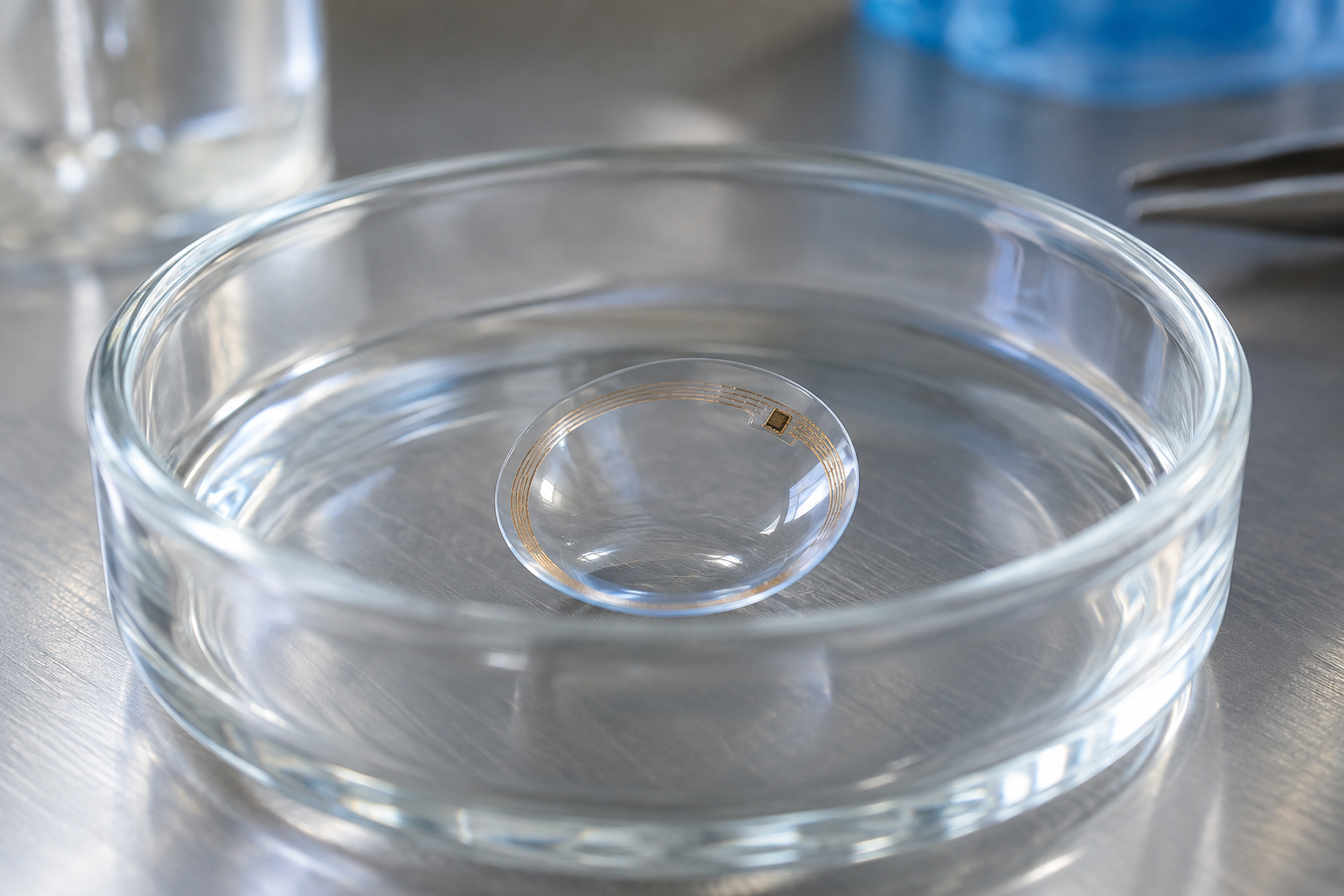
A tiny chip inside a contact lens: was it meant to display messages or take photographs? The question behind Google's 2014 smart contact lens announcement was different. Could tears provide information about the body?
This is not a current product launch. It is a look back at a research announcement and the possibilities of a lens beyond vision correction. It also shows how far “a working prototype” can be from “a medical product available to use.”
Putting electronics into a familiar contact lens is striking. But the interesting issue is not only chip size. It is how to turn a signal from the body into information people can trust.
The 2014 goal was not a screen in front of your eyes
Google's January 2014 announcement introduced a prototype with a tiny wireless chip and glucose sensor between layers of soft lens material to measure glucose in tears. It explicitly described research and said much more work was needed to create a system people could use.
Reading it as a lens-shaped smartphone or an already launched glucose monitor changes the context. The focus was a measurement signal from tears, not an image displayed in your vision.
We usually think of contacts as tools for seeing clearly. This research connected their position on the eye to another question: could an object touching the eye be a place to observe biological information around it?
Fitting electronics inside does not solve everything
Miniaturizing components and making a usable lens must be addressed together. Rigid components raise questions about compatibility with soft material and preserving a path for light.
A separate example is a 2018 Science Advances study. Researchers reported integrating a glucose sensor, wireless power circuitry and a light-emitting signal element into a soft lens structure. This was an independent study by another team, not an evaluation of Google's product.
It included testing on a live rabbit. That condition is essential to interpreting the result, not a dismissive detail. An animal-tested prototype must not be described as a finished product suitable for long-term human use.

From a tear measurement to a medical decision
Detecting a substance and using the result to assess health or make treatment decisions are different levels of claim. A demonstration showing a sensor reading does not establish the latter.
When reading research news, start with what was directly measured. Which tear component, which comparison standard and which human testing conditions are separate questions. Even if the headline says “blood glucose,” check the measurement target and validation in the body of the article.
You need not become an experimental specialist. The useful habit is avoiding turning a reported possibility into a function immediately applicable to daily life. A photograph of a small sensor and documentation of authorization for use are different evidence.
Look beyond the starting announcement
Early research announcements remain in search results for years, while follow-up developments may appear elsewhere. Reading only the starting point can make an old goal look like an active launch promise.
In 2018, Novartis's Vas Narasimhan, whose company participated in the collaboration, explained in a public post that the glucose-sensing smart lens collaboration with Verily had not achieved the hoped-for results. This record shows why the 2014 ambition alone does not justify assuming a product launch.
One project's outcome does not decide the fate of all smart lens research either. Assess each study by its own aims and evidence. “Smart lens” can refer to different sensors and intended uses.
What to check in a research image
Circuits shining around a lens edge attract attention. But distinguish an actual prototype photograph, a structural diagram and an imagined future image. A polished illustration does not demonstrate clinical performance.
The images in this article are generated illustrations for understanding. They are not photographs of a particular team's prototype or a patient's use. Consult the linked original explanations and figures for actual structures and test results.
For a new research story, note the announcement year, actual test subjects and demonstrated function. Those three points help prevent confusing an old prototype with a newly available product.

A story that changes how we see a familiar lens
Smart lens research expands the questions we ask about contacts: not only what can fit inside a thin transparent object, but what requirements a device touching the eye every day must meet.
There is no reason to assume your current vision-correcting contacts contain sensors. The historical research discussed here does not replace present examinations or treatment. Read with interest, while using actual products according to their established purposes and instructions.
Revisiting Google's 2014 announcement is more than scoring a prediction. A familiar lens prompted a new question, and turning the answer into dependable everyday technology required a separate process of validation.