
Are Daily and Monthly Contact Lenses Really Different—or Just Packaged Differently?
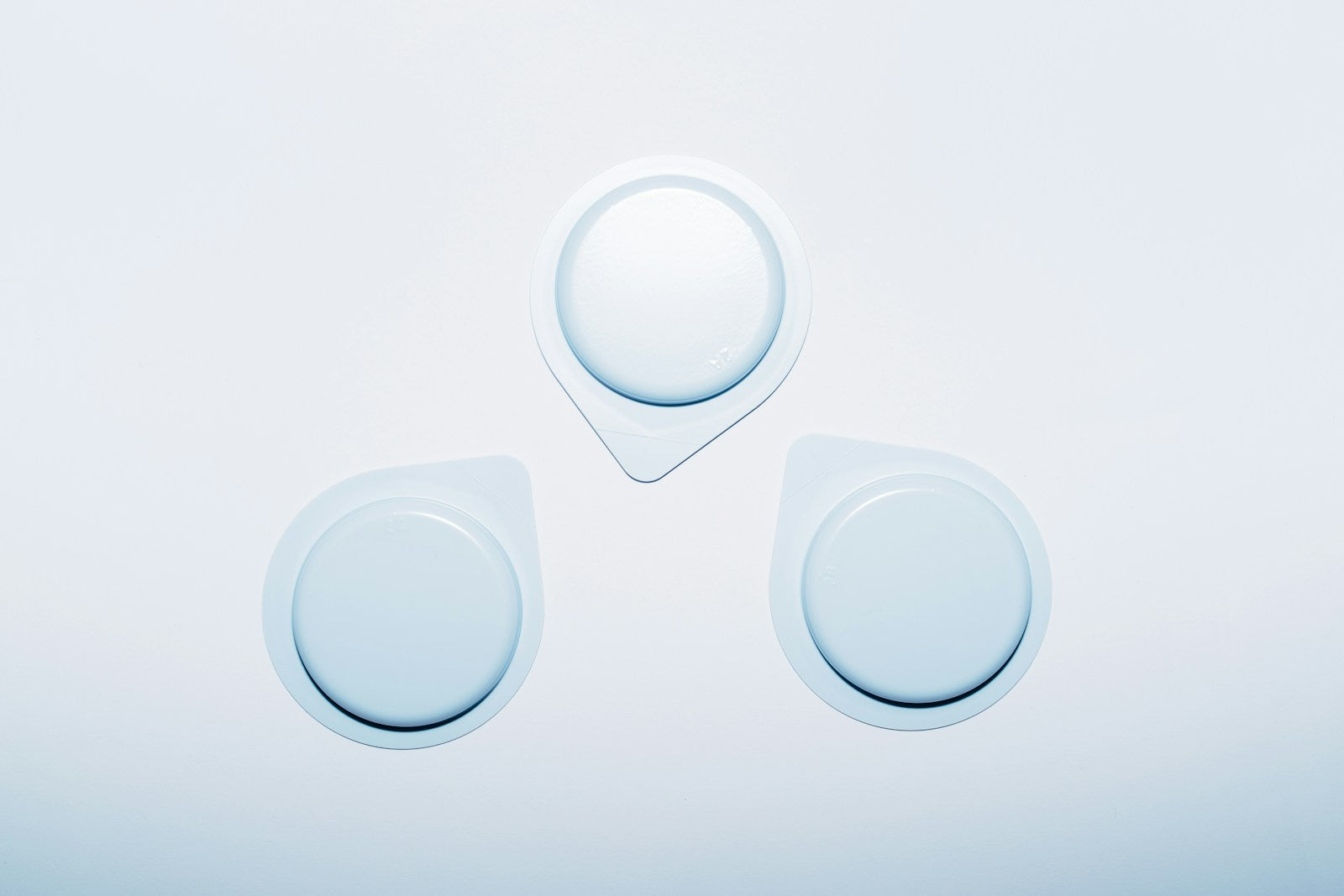
Place two lenses on your palm.
One is a daily disposable.
One is a monthly replacement lens.
Both are clear.
Both are soft.
Both are so thin that they appear almost identical.
Yet one must be discarded tonight.
The other can be cleaned and worn for weeks.
This seems odd.
If one phone lasted 30 times longer than another, you would expect to see a difference. If shoes came in one-day and one-month versions, the materials would probably announce it.
Contact lenses do not.
Are manufacturers placing the same lens in different quantities of packaging?
No.
But the answer is not as simple as “dailies are thin and monthlies are thick.” Products within either category vary in material, surface, geometry, and oxygen performance.
The most important distinction may be invisible:
A daily lens resets its contamination history every morning. A monthly lens asks the wearer to manage that history for weeks.
Replacement Schedule Is a Use Contract, Not a Countdown of Wears
“Monthly” is easily misunderstood as “30 uses.”
Wear it once this Monday.
Twice next week.
Continue until the total reaches 30.
For most monthly-replacement products, the schedule begins when the blister is opened, not when a wearing counter reaches 30. Follow the product and professional instructions that apply to your lens.
Opening the blister ends the factory-sealed environment.
The lens meets fingers.
Tears.
A case.
Care solution.
Air and the bathroom.
The management history has begun even on days the lens remains in its case.
A replacement date does not mean the material suddenly fails at midnight. It marks the period within which the lens was evaluated under specified use and care.
Why Do Dailies Need No Cleaning?
Not because they cannot become dirty.
Because there is no next day.
Open a sterile blister in the morning.
Wear the lens.
Remove it at night.
Discard it.
There is no second day for deposits to accumulate. No case. No topping off old solution. No chance to forget the cleaning step.
One of the daily disposable’s most important innovations is not a single polymer.
It removes complicated care behavior from the system.
Why Can a Monthly Lens Be Used Again?
Reusable lenses are designed and approved for repeated wear and care during a defined period. Material, surface, mechanical properties, and geometry all matter.
That does not make them indestructible.
After removal, they require cleaning, disinfection, and proper storage with the specified system. The case must be maintained too.
A monthly lens’s real-world performance includes user behavior.
The factory makes the initial product.
The wearer’s care routine helps determine what that product becomes on day 20.
Two people can open identical blisters and end the month with very different lens surfaces.
Are Daily Lenses Always Thinner?
No.
Thickness depends on power, material, central and peripheral geometry, handling, oxygen goals, and lens design.
High minus lenses tend to be thinner centrally and thicker toward the edge. Plus lenses can be thicker centrally. Toric lenses include stabilization geometry.
Some dailies are extremely thin and soft. Others retain enough shape for easier handling. Some silicone-hydrogel monthly products offer high oxygen transmission in a thin design.
Predicting thickness from replacement category alone is like predicting paper texture from the number of pages in a book.
Water Content Does Not Divide the Categories Either
It sounds logical that dailies contain more water and monthlies less.
Product specifications do not line up that way.
Water content is one material property. Comfort also involves wettability, oxygen transmissibility, modulus, geometry, thickness, and interaction with the wearer’s tears.
Higher water content does not guarantee greater comfort for every eye. Silicone hydrogels can transmit oxygen through silicone rather than relying primarily on water, but surface treatment and material behavior differ among products.
Daily versus monthly is not a competition between two water percentages.
It is a comparison of complete use systems containing many different lens designs.
What Accumulates Over a Month?
Tears contain proteins and lipids.
Eyelids supply oils.
Hands can carry skin products and makeup.
Air carries particles.
The lens passes through this environment every day.
Even with good care, deposits may not remain exactly zero. Different materials interact with proteins and lipids differently. As the surface changes, wettability, friction, comfort, and visual stability can change.
A monthly lens does not transform suddenly on day 30.
Small changes accumulate.
A daily lens discards the accumulation.
A monthly system attempts to control it through care.
Cleaning Does Not Turn a Lens Back Into a Factory-Fresh Product
Care solution reduces contamination, disinfects microorganisms, and stores a lens appropriately.
It does not reverse time.
It cannot repair a damaged edge.
Remove every possible deposit.
Erase unapproved water exposure.
Or restore a makeup-contaminated lens to factory condition.
Cleaning is not a substitute for replacement.
It maintains the product within its replacement period.
That is why “It still looks clean” is not a reason to extend the schedule. Important changes may be invisible.
Does Wearing a Daily Twice Turn It Into a Reusable Lens?
No.
A daily disposable was not designed around removal, cleaning, overnight storage, and reinsertion. Looking normal after one day does not create evidence for another.
Every removal and reinsertion adds handling and contamination opportunities. The product’s approved use system does not include a reusable case or care routine.
Wearing it twice appears to cut the price in half.
It actually converts a medical device into an untested use pattern.
Why Not Stretch a Monthly Lens for a Few More Days?
“A few days” feels trivial.
The replacement schedule exists partly because users cannot visually judge every relevant change. Comfort does not prove a like-new surface. Clear vision does not prove unchanged oxygen performance or microbial risk.
People adapt to slow discomfort. Yesterday’s slightly drier lens becomes today’s normal.
The schedule is a device that refuses to rely on that adaptation.
Calculate Cost by Days Actually Worn
Monthly lenses look inexpensive because one pair can cover many days. Dailies look expensive because two new lenses are used each day.
For someone wearing contacts nearly every day, a monthly product may have a lower daily cost, although solution and cases must be added.
For someone wearing lenses once or twice a week, the answer changes. A monthly lens expires on its calendar schedule even if worn only a few times. A daily creates cost only on wearing days.
Dailies may therefore be more economical for travel, sport, and occasional use.
Box price distorts the comparison.
The useful number is the total cost of producing one day you actually wear contacts.
Include the Cost of Care Failure
A reusable system requires solution, a case, clean hands, daily time, and discipline while traveling.
If you perform those tasks consistently, it can be an excellent choice.
If you frequently skip steps, keep old cases, or sleep in lenses, theoretical savings ignore the safety cost of real behavior.
A lower-priced system is not lower-cost if its required care is repeatedly not performed.
Dailies Are Not Automatically More Comfortable
Many wearers prefer a fresh daily surface, but no daily lens fits every eye.
Material or geometry may be unsuitable. Toric, multifocal, or high-power options may be limited. Tear-film interaction varies.
Some wearers achieve more stable comfort and vision in a specific monthly product.
Replacement category is one selection factor.
It does not replace a prescription and fit assessment.
Monthly Does Not Mean Indestructible
A reusable lens can tear under a fingernail.
Dry out.
Become contaminated with cosmetics or water.
Fall onto an unclean surface.
A damaged lens must be replaced even when days remain. Paying for a month does not make wearing a damaged medical device economical.
Travel Makes the Difference Visible
Dailies require many blisters but no care solution or case. If one is lost or contaminated, open another.
Monthly lenses require fewer individual lenses but need solution, a clean case, and reliable handwashing. Airline liquid restrictions may matter.
The easier option depends on trip length, baggage, environment, and habits.
Choosing a lens is partly choosing a lifestyle system.
The Environmental Question
Dailies create two lenses, two blisters, and two foil lids each wearing day. Hygiene and convenience increase packaging waste.
Monthly systems use fewer lenses and blisters but require solution bottles and cases. Full environmental comparison requires manufacturing, transport, packaging, actual behavior, and disposal.
Neither category becomes automatically “green” from one number.
Yet the visible daily packaging burden is a legitimate concern—and the subject of a separate EzyLens article in this series.
Who May Prefer Which System?
Dailies can suit people who:
- wear contacts occasionally
- use them mainly for travel or sport
- want to minimize care steps
- value a fresh surface every day
- struggle with deposit buildup
Reusable lenses can suit people who:
- wear contacts almost daily
- can perform consistent cleaning and case care
- need a specific toric, multifocal, or power option
- have a stable fit in a particular reusable design
- prioritize lower cost per frequent wearing day
This is a decision framework, not an individual prescription.
The Difference Is Not Only Inside the Lens
Daily and monthly products can differ in material, surface, and geometry.
The largest practical difference, however, may sit outside the lens.
Dailies transfer much of the hygiene complexity to manufacturing and individual sterile packaging.
Monthlies gain repeat-use economy by leaving daily care responsibility with the wearer.
One buys a fresh beginning each morning.
The other requires the ability to carry yesterday’s lens safely into today.
Return to the original question.
Are daily and monthly contacts the same product in different boxes?
No.
And beyond material differences, their responsibility systems are different.
A daily discards yesterday’s risk history. A monthly can return today only if yesterday’s lens was managed correctly.
Replacement schedule is not merely a number.
It decides where responsibility for hygiene and performance will live.
References
- US Food and Drug Administration, Contact Lenses
- US Centers for Disease Control and Prevention, Healthy Contact Lens Wear and Care
- American Optometric Association, Contact Lenses
- British Contact Lens Association, Contact Lens Resources
This article provides general information and is not a product prescription. Choose lens type and replacement schedule according to your eye health, prescription, product instructions, and professional evaluation.