
Which Eye Drops Can You Use With Contact Lenses In?
When your eyes feel dry or turn red, the first thing you reach for is the eye drops in your bag. But if you have lenses in, stop for a moment.
The American Academy of Ophthalmology (AAO) puts it briefly: it is best to avoid using any kind of eye drop when wearing contacts. There is one exception: wetting drops or preservative-free lubricating drops recommended by your eye doctor.
Why such caution?
Soft lenses soak things up like a sponge
Many eye drops contain a preservative to stop germs from growing. The most common is benzalkonium chloride (BAK).
The problem is that soft lenses are made of a material that holds water. Here is what studies summarized by the US optometry journal Review of Optometry show.
- When soft lenses of various water contents were soaked in BAK solution, the lenses took up a lot of BAK, and only a small amount washed out in the first 24 hours. The researchers concluded that the amount of BAK retained by the lenses and released again is a safety concern.
- Another study found that silicone hydrogel lenses soaked in BAK solution caused damage to the cells of the corneal surface.
This means that if you put preservative-containing drops on top of a lens, a preservative that tears would otherwise have washed away can stay in the lens and remain in contact with the cornea for longer.
Why "put lenses back in 10 minutes later"

That is why drops that should not be used with lenses tell you to take the lenses out, put the drops in, then wait before putting the lenses back.
The Drug Facts label of a ketotifen allergy eye drop sold in the US says to remove contact lenses before use and wait at least 10 minutes before reinserting them. This product contains 0.01% BAK.
Review of Optometry explains that the most common FDA recommendation is to remove lenses before putting in drops and reinsert them 10 to 15 minutes later. In one study, removing the lens for five minutes was no different from not removing it at all, while removing it for 10 minutes was appropriate to prevent significant absorption.
Five minutes is not enough; you need to wait ten.
Be especially careful with redness relievers
Some drops make red eyes look white. The AAO explains that most of these are made from a decongestant called tetrahydrozoline. It temporarily narrows the blood vessels of the eye to reduce redness.
The problem comes when it wears off. The AAO explains:
- When it wears off, your eyes can become more red than before. This is called rebound redness.
- Rebound redness can worsen over time, leading to persistent red eyes.
- As with a nasal decongestant, don't use them for more than 72 hours.
The AAO explains that red eyes often happen when the eyes are irritated by contact lenses. If you only mask the redness with a redness reliever, you may miss the cause. The AAO recommends preservative-free artificial tears if they relieve the redness.
What to check when choosing drops

- Check whether it says it can be used with contact lenses in. Wetting drops for lenses are made to be used with lenses in.
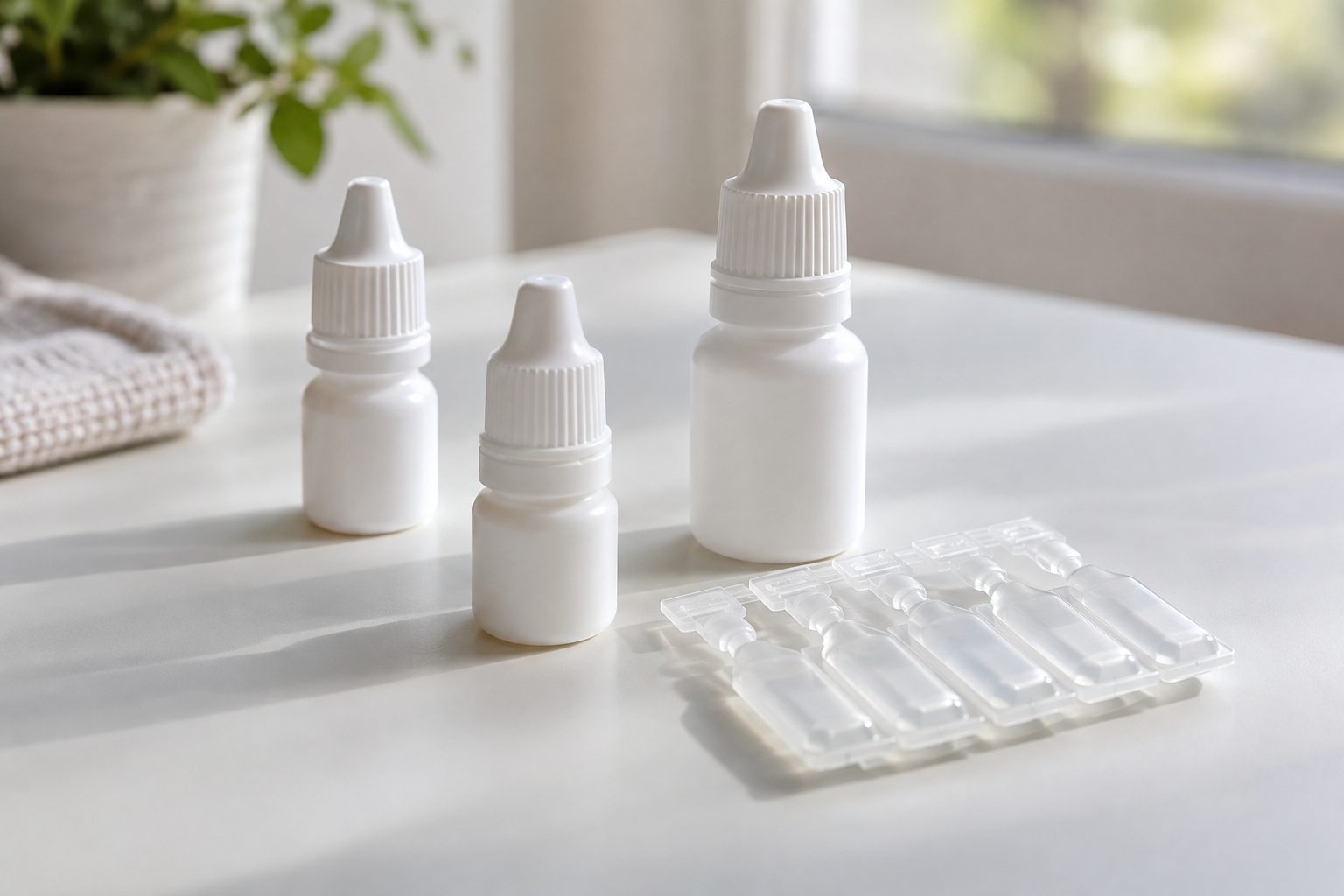
- Check the ingredient list for preservatives. Preservative-free artificial tears in single-use vials are used once and thrown away.
- Treatment drops such as allergy, antibiotic or glaucoma drops go in with lenses out. Follow the product label and your doctor's instructions on when to put lenses back.
- Don't use redness relievers with lenses, and even without lenses, don't use them for long.
When drops are not the answer
If your eye keeps hurting, stays red or your vision is blurry even after drops, it is not something to fix with drops. Remove your lenses and see an eye doctor. Which symptoms are warning signs is covered in the next article.
Why lenses dry out every afternoon is covered in Why Do Contact Lenses Start Feeling Dry in the Afternoon?
References
- American Academy of Ophthalmology (AAO), How to Take Care of Contact Lenses
- American Academy of Ophthalmology (AAO), Redness-Relieving Eye Drops
- Review of Optometry, Drop and Ointment Instillation in Contact Lens Wear
- US National Library of Medicine DailyMed, Allergy Eye Drops (ketotifen fumarate)
This article is general information and does not recommend any product. Follow the product label and the instructions of an eye care professional or pharmacist when using eye drops.